

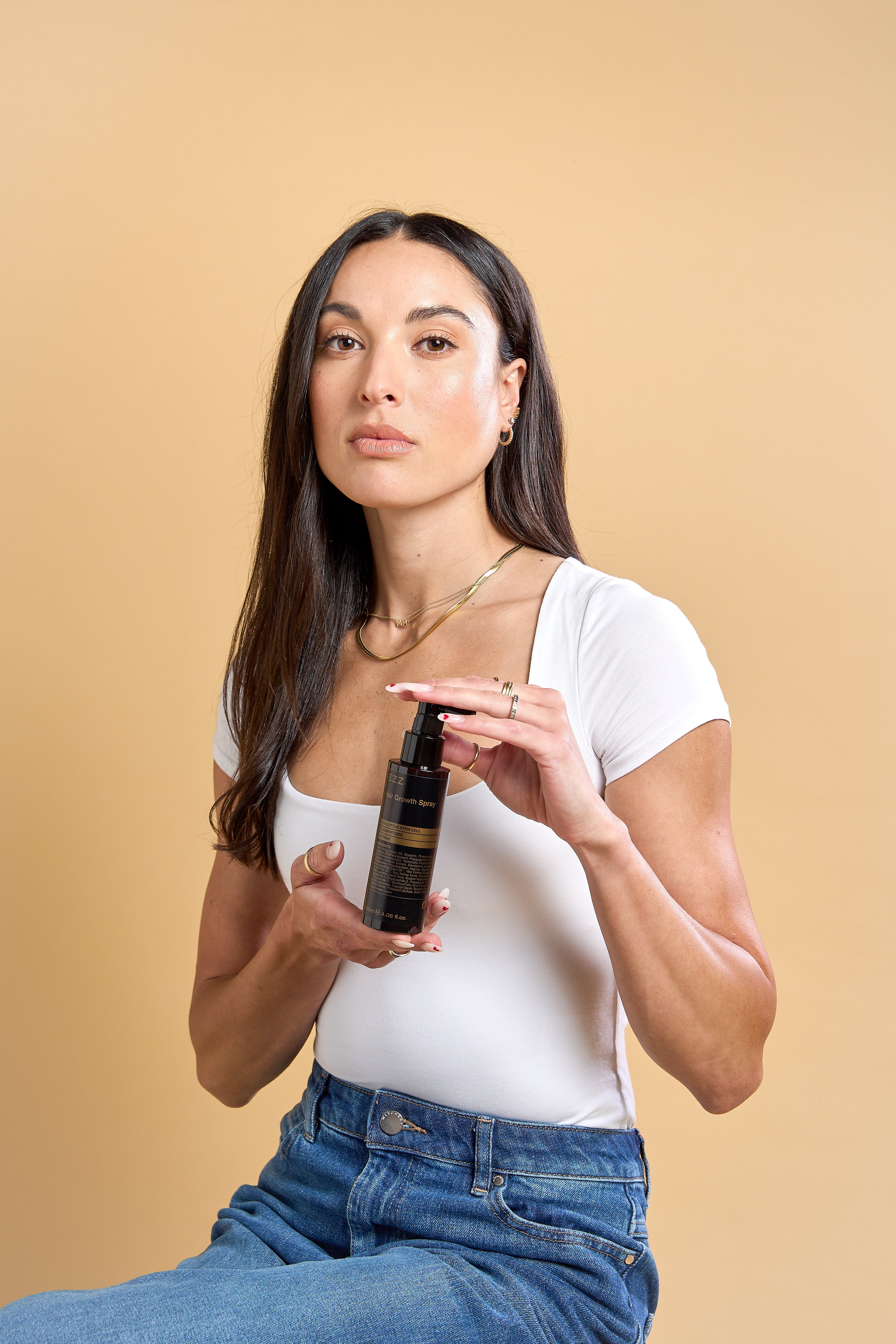
Hair loss does not look the same in your 30s, 40s, and 50s. That is where a lot of advice goes wrong.
Most generic hair loss content treats shedding, thinning, and regrowth as if they follow the same pattern at every age. They do not. Hormones shift, scalp sensitivity changes, recovery slows, and hair growth cycles become less efficient over time. So if your routine has not changed with your life stage, there is a good chance it is no longer doing enough.
The good news is that not everything changes. Some principles still work at every age: early action, consistency, scalp health, and targeted support. The difference is how you apply them.
In this guide, we explain how hair loss and regrowth tend to change across life stages, what causes those changes, what still works, and how to choose a routine that fits where you are now. If you are looking for a more personalised way to support your hair health, EZZ DNA can help guide a more targeted approach based on your needs instead of guesswork.
Why Hair Loss Changes With Age
Hair grows in cycles. Each strand moves through a growth phase, transition phase, resting phase, and shedding phase. When you are younger, those cycles are usually more efficient. Hair recovers faster, follicles are more resilient, and temporary shedding is less likely to leave visible thinning behind.
As you get older, several things begin to shift:
- hormonal fluctuations can affect the hair growth cycle
- follicles may become more sensitive to internal and external stressors
- scalp condition may worsen due to dryness, buildup, or inflammation
- regrowth may slow down
- hair strands may become finer over time
That is why someone in their 30s may recover from stress-related shedding more easily than someone in their 50s. It is also why the same product or routine may stop delivering the same results over time.
A smarter hair strategy starts with understanding your stage.
Hair Loss in Your 30s: Early Thinning, Stress, and Hormonal Disruption
Your 30s are often the first decade where hair changes become noticeable. For some people, this looks like extra hair in the shower drain. For others, it is a widening part line, a ponytail that feels thinner, or a scalp that becomes more visible under bright light.
This stage is important because hair loss is often still in its earlier, more manageable phase. The follicles are usually more responsive, which means this is the best time to intervene.
What commonly changes in your 30s
1. Stress starts to show up in your hair
Stress-related shedding becomes more common in your 30s due to work pressure, lack of sleep, parenting demands, burnout, illness, or major life changes. This kind of shedding can push more hairs into the resting phase at once, which leads to noticeable hair fall a few months later.
2. Hormonal shifts can start affecting density
Hormonal changes do not only happen later in life. In your 30s, factors such as postpartum recovery, thyroid imbalance, changes in contraceptive use, PCOS, and other hormonal fluctuations can influence hair growth and shedding patterns.
3. Early thinning may begin
This is also the stage where some people begin to see the first signs of progressive thinning. It may not look dramatic yet, but that does not mean it should be ignored. Early-stage thinning is exactly where targeted support can make the biggest difference.
What still works in your 30s
At this stage, the focus should be on stabilising shedding, protecting follicle health, and acting early. What tends to help most is having:
- a consistent scalp care routine
- stress management and sleep support
- checking for nutritional deficiencies
- early use of clinically supported hair care strategies
- targeted product selection based on actual needs rather than trends
Furthermore, instead of guessing whether your hair changes are more likely tied to scalp condition, sensitivity, lifestyle stress, or inherited patterns, a more personalised approach can help you choose a routine that actually matches your stage and concerns.
What people get wrong in their 30s
The biggest mistake is minimising the issue. People say things like:
- “It is probably just stress.”
- “It will come back on its own.”
- “It is too early to worry about hair loss.”
That thinking delays action. Not every shedding issue becomes long-term thinning, but waiting until the loss is obvious is a bad strategy. The best solution you can come up with is early detection as this is the key to preventing hair loss. It is easier, cheaper, and more effective than trying to reverse advanced thinning later.
Hair Loss in Your 40s: Density Loss and Slower Recovery
Your 40s are often where hair changes become harder to dismiss. Shedding may not always be extreme, but overall density can start to drop. Hair can feel flatter, finer, and less resilient. You may notice that regrowth takes longer or that the hair you do regrow does not feel as thick as it used to. This is where the conversation shifts from occasional disruption to longer-term maintenance and reinforcement.
What commonly changes in your 40s
1. Hair density may decline
Even if you are not losing large clumps of hair, your overall volume may decrease. This often happens because individual strands become finer over time, making the hair look thinner even before actual follicle loss becomes severe.
2. Recovery slows down
In your 20s or early 30s, hair may have bounced back faster after stress or hormonal changes. In your 40s, recovery may take longer. A shedding event that once resolved in a few months may now linger or leave more visible thinning behind.
3. Hormonal changes become more influential
For many women, perimenopausal changes begin affecting hair in the 40s. Shifts in estrogen and progesterone can alter the balance that once supported fuller, healthier-looking hair. For men and women alike, age-related hormonal influence may make follicles more vulnerable over time.
What still works in your 40s
Now the goal is not just to stop shedding. It is to support hair retention, improve scalp conditions, and reinforce weakened strands before thinning progresses further. Effective strategies often include:
- routines that support scalp health and reduce buildup
- ingredients and treatments chosen for thinning and density support
- greater consistency, because short-term use rarely delivers much
- more personalised product matching based on how your hair and scalp are actually behaving
This is the life stage where many people waste money trying random hair growth products that are not suited to their actual condition. A personalised plan matters more here because the problem is usually more layered.
What people get wrong in their 40s
The biggest mistake in this stage is inconsistency.
People try one product for three weeks, stop, switch to another, then decide nothing works. That is not a treatment failure. That is poor execution. Hair care for thinning needs time, consistency, and relevance.
The second mistake is relying on the same routine used in earlier years. If your hair is becoming finer, slower to recover, and more sensitive, then a basic shampoo-conditioner setup is unlikely to be enough.
Hair Loss in Your 50s and Beyond: Longer Growth Cycles and Greater Sensitivity
Hair changes in your 50s and beyond are often more structural. This is not just about shedding. Hair may grow more slowly, feel more fragile, and become more reactive to dryness, irritation, or hormonal shifts. The scalp may also become less balanced, which can make healthy regrowth harder to support.
This stage needs realism. You can still improve the appearance and condition of your hair, but the expectation should be optimisation and support, not fantasy-level overnight restoration.
What commonly changes in your 50s+
1. Growth cycles tend to slow down
Hair may spend less time actively growing and more time in resting phases. That means regrowth can feel less obvious and visible improvement may take longer.
2. The scalp may become more sensitive
With age, the scalp can become drier and more reactive. Harsh products, over-cleansing, or aggressive treatment routines can do more harm than good.
3. Hair may become finer and more fragile
Strands often lose body and resilience. Even if hair is still growing, it may not look as full because the strands themselves are weaker or thinner.
What still works in your 50s+
At this stage, the winning strategy is usually:
- gentle but consistent scalp support
- hydration and barrier-friendly care
- targeted support for thinning and weak strands
- realistic long-term maintenance
- a personalised routine that avoids unnecessary irritation
What people get wrong in their 50s+
The biggest mistake here is either doing too little or doing too much.
Some people give up and assume nothing can help. Others overload their scalp with aggressive products in search of fast regrowth. Both approaches are flawed. Hair support in this stage is about consistency, suitability, and patience.
What Still Works at Every Life Stage
A lot changes with age, but some principles hold up no matter where you are in the hair loss journey.
1. Early action matters
The longer thinning continues without support, the harder it can be to improve the situation. Waiting for obvious bald spots or major density loss is a poor strategy.
2. Scalp health is foundational
You cannot expect strong hair growth from an unhealthy scalp environment. Buildup, irritation, dryness, and imbalance all interfere with hair quality and retention.
3. Consistency beats hype
Hair routines fail more often because they are abandoned too early or changed too often, not because every product is useless.
4. Personalisation matters more over time
The older you get, the less effective generic advice tends to be. Hair loss becomes more complex with age, which means targeted care becomes more valuable.
How to Choose the Right Hair Routine for Your Stage of Life
This section is where the article should start leaning more commercially. By now, the reader has enough context. They understand that hair loss changes with age and that generic routines are often mismatched. So now you guide them toward selection.
- If you are in your 30s: Focus on early support, shedding control, scalp health, and stress-aware hair care. You want to protect follicle performance before thinning becomes harder to reverse.
- If you are in your 40s: Focus on density support, routine consistency, and targeted scalp and strand care. You need more reinforcement and less experimentation.
- If you are in your 50s+: Focus on gentle but strategic maintenance, scalp comfort, and supporting the quality of the hair you still have while encouraging the best possible regrowth environment.
Why Choose EZZ DNA for Your Hair Growth Routine
By now, one thing should be clear: hair loss is not a single problem with a single solution. It changes with age, lifestyle, and biology, which is exactly why generic routines often fail.
Most people approach hair care through trial and error such as switching products every few weeks, follow trends that don’t match their actual needs, and guessing what their scalp or hair actually requirese—that approach wastes time and delays results.
EZZ DNA removes that approach. Instead of relying on broad recommendations, it helps guide you toward a more targeted routine aligned with your hair stage and concerns, whether you're managing early thinning, density loss, or age-related changes.
Start it off with Hair Growth Full Shampoo, to cleanse of your style and daily buildup, creating a clean, balanced scalp environment where targeted treatments can actually perform. Without that foundation, even the best products struggle to deliver results, so pairing the right insight with the right routine is what ultimately drives progress.
That is how you shift the article toward transactional intent without sounding pushy. You are not forcing a sale. You are giving the reader a credible reason to move from learning to action.
Explore EZZ DNA and start building a routine that works with your stage of life, not against it.


